

The United States, Europe, and Russia are talking about security. The barriers to agreement are many, but as Winston Churchill — no shrinking violet when it came to combat — quipped, “to jaw-jaw is always better than to war-war.” Alas, today many U.S. policymakers don’t agree.
During the Cold War Americans were prepared to fight over essentials — witness the Cuban Missile Crisis — but carefully avoided allowing geopolitical brushfires to escalate. Afghanistan, Czechoslovakia, Hungary, Korea, Mideast, Poland, and Vietnam all burned dangerously but were contained.
However, hubris increasingly dominates Washington and the foreign policy establishment today. The 2008 Georgia crisis led the White House to consider proposals to intervene militarily. Republican presidential candidates in 2016 backed a no-fly zone in Syria which would have meant shooting down Russian planes. Sen. Roger Wicker recently urged military support for Ukraine, including with nuclear weapons.
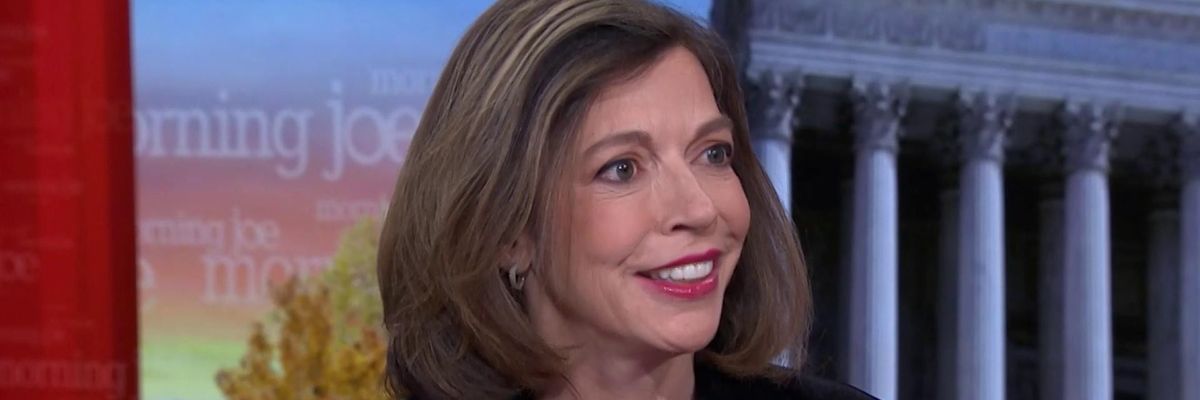
Now a Democrat has come out of the war closet. Evelyn N. Farkas, a Pentagon official during the Obama administration, is now advocating initiating a great power and likely a nuclear war.
Farkas dismissed economic sanctions against Russia, contending that “U.S. leaders should be marshalling an international coalition of the willing, readying military forces to deter [Russian President] Putin and, if necessary, prepare for war.” Indeed, she would fight over Georgia as well as Ukraine: “we must demand a withdrawal from both countries by a certain date and organize coalition forces willing to take action to enforce it.”
It is worth reflecting on what that would mean. Russia is ranked second in the world in military power. Moscow matches America’s nuclear arsenal and possesses local conventional superiority. Is she prepared to lose the war she would start?
After all, the United States would be fighting alone. She cited as precedent “the international community” for uniting “in the defense of international borders and Kuwait’s sovereign rights” against Iraq, as if the latter’s military was in any way comparable to that of Russia. Even so, of the 34 members of the “coalition of the willing,” only the United Kingdom provided substantial military support. Australia and the United Arab Emirates added a couple thousand troops each; Denmark provided around 100. Countries such as Eritrea, Palau, and Singapore offered public support. Latvia, Macedonia, Poland, and Slovenia wrote letters.
Who does Farkas imagine would join Washington against nuclear-armed Russia? Germany, Spain, Luxembourg, Italy, Greece, Montenegro, Turkey? Let the gales of laughter subside before continuing. How about Europe’s two most serious military powers, France and the United Kingdom? They did not become great powers back in the day by embarking on suicidal crusades. The Baltic States might want to join, but would offer little in a real war. Who is left? Poland? Even it is unlikely to risk national devastation by joining such a fight.
Europe today is almost defined by its determination to cheap ride on America and avoid taking serious military action on its own. Indeed, European peoples admit that they don’t want to defend their neighbors even as they expect the U.S. to come to their aid. Support for fulfilling their NATO obligations peaked at just 55 percent in Britain and fell to 25 percent in Greece and Italy. The Ukrainians would be waiting a long time for the European cavalry to arrive.
Nor are there likely to be many Asians, Africans, or South Americans joining the anti-Russia coalition. Many words might be spilled praising the heroic Ukrainian democracy battling autocracy. As for the dispatch of military units prepared for action, not so many.
Without her grand coalition, Farkas warned: “If Russia prevails again, we will remain stuck in a crisis not just over Ukraine but about the future of the global order far beyond that country’s borders. Left unrestrained, Putin will move swiftly, grab some land, consolidate his gains, and set his sights on the next satellite state in his long game to restore all the pre-1991 borders: the sphere of geographical influence he deems was unjustly stripped from Great Russia.”
This sounds like a fearsome prospect but is belied by Putin’s record. He has been in power nearly twice as long as Adolf Hitler and his conquests are Crimea and, well, influence over the Donbass, South Ossetia, and Abkhazia. Whatever Putin might privately desire, his policy has been restrained even when brutal. Nothing he has done or said suggests war against the wide array of other states which seceded from the USSR. Moscow’s recent intervention in Kazakhstan was minimal and in response to the local government’s request.
Indeed, Putin’s almost singular focus for the last eight years has been on Ukraine — and only after NATO promised its inclusion, the EU sought to redirect commerce westward, the allies backed a street putsch against the democratically-elected Russia-friendly president, and U.S. officials wandered Kyiv streets while talking about who they wanted to run the new government. This didn’t justify his harsh response, but had Moscow done the same to Canada or Mexico, Washington would have been in an uproar with hysterical officials like Farkas talking of war and demanding action. Lacking similar circumstances elsewhere, Putin is unlikely to initiate another conflict which would be disastrous for all concerned, including Russia.
In an argument that grew more hysterical the further it went, Farkas repeated a common misconception, claiming that Moscow’s annexation of Crimea “was the first time military force had been employed to change borders in Europe since Hitler’s invasions and occupations.” In 1974, Turkey invaded Cyprus and occupied 37 percent of the island, which became the Ankara-only recognized Turkish Republic of Northern Cyprus. Yugoslavia broke apart with lots of force used to change multiple borders. That included the lawless U.S. invasion of Serbia and creation of Kosovo. Indeed, Putin cited America’s action as precedent for his 2008 support for separatists in Abkhazia and South Ossetia, who had been long hostile to Georgia.
Farkas’ climax sounded like Curtis LeMay channeling QAnon: “Any subsequent acceptance of Russian gains will spell the beginning of the end of the international order. … Any appeasement will only beget future land grabs not only from Putin, but also from China in Taiwan and elsewhere. And if the world’s democracies lack the political will to stop them, the rules-based international order will collapse. The United Nations will go the way of the League of Nations. We will revert to spheres of global influence, unbridled military and economic competition, and ultimately, world war.”
It is hard to disentangle such a farrago of non sequiturs. Russia acted in Georgia more than 13 years ago and Ukraine eight years ago without the world’s descent into the new Dark Ages that she imagines. Why now? Beijing’s interest in Taiwan is historic and deep and unrelated to Russia’s actions. Few nations, including the U.S., allow peaceful secession, which is how China sees the island. The UN was always ineffective since it was designed to prevent it from blocking any of the great powers, starting with America. Is Farkas prepared to give up Washington’s sphere of influence — namely the Monroe Doctrine — which the Trump administration so zealously defended?
Would any of the other rules she wants the world to back with force apply to America? She closed her article: “We must build a new coalition of the willing to enforce the state sovereignty enshrined in the UN Charter.” The US violated that principle in Serbia, Iraq, Syria, and Yemen, and misused the authority voted by the UN in Libya. Would she support her new coalition acting against Washington?
Russia is a malign force, but Washington cannot escape its share of responsibility after spending three decades ignoring Moscow’s security sensitivities. Ukraine is suffering as a result. However, it is not the American purpose to rescue every nation stuck in a bad geopolitical neighborhood.
Until 2014 Ukraine developed as it wished. Needed is a modus vivendi which leaves Kyiv internally free but nonaligned militarily. Ukraine might prefer the world to fight on its behalf, but Washington’s job is to defend America and its people. That is best achieved by not starting World War III over Ukraine.